Oil-Resistant Work Gloves: What to Look For and Why It Matters
When working with oil and other lubricants, oil resistant work gloves are essential to prevent accidents and ensure a safe working environment. Oil resistant work gloves may help workers in industries such as automotive, manufacturing, and construction to handle tools and materials with confidence. In a workplace where oil spills and splatters are common, the right pair of oil resistant work gloves can make all the difference in preventing injuries and reducing downtime.
Oil resistant work gloves are designed to support workers in various industries, providing a barrier between the skin and hazardous substances. The importance of oil resistant work gloves cannot be overstated, as they may help prevent skin irritation, cuts, and other injuries. By choosing the right pair of oil resistant work gloves, workers can focus on their tasks without worrying about the risks associated with oil and other lubricants.
Oil Resistant Work Gloves: Understanding the Standards
ASTM and OSHA Standards
The American Society for Testing and Materials (ASTM) and the Occupational Safety and Health Administration (OSHA) have established standards for oil resistant work gloves. These standards ensure that gloves meet certain criteria for oil resistance, cut resistance, and other factors. When selecting oil resistant work gloves, it is essential to look for gloves that meet or exceed these standards.
OSHA requires employers to provide workers with personal protective equipment (PPE), including gloves, that meet specific standards. ASTM standards for oil resistant work gloves include tests for oil resistance, such as the ASTM D6978 test method. By choosing gloves that meet these standards, employers can ensure that their workers are protected from the risks associated with oil and other lubricants.
Materials and Construction
Nitrile and Other Materials
Nitrile is a popular material for oil resistant work gloves due to its excellent oil resistance and durability. Nitrile gloves are often preferred in industries where oil and other lubricants are common, as they provide a reliable barrier against these substances. Other materials, such as polyurethane and latex, may also be used in oil resistant work gloves, but nitrile remains a top choice for many workers.
The construction of oil resistant work gloves is also critical, as it can affect the glove's performance and durability. A well-constructed glove with a comfortable fit and reinforced palms and fingers can provide workers with the confidence they need to perform their tasks safely and efficiently. By choosing gloves with a sturdy construction and high-quality materials, workers can reduce the risk of injuries and improve their overall job performance.
Comparing Oil Resistant Work Gloves
Features and Benefits
When comparing oil resistant work gloves, it is essential to consider the features and benefits of each glove. Some gloves may offer superior oil resistance, while others may provide better cut resistance or dexterity. By evaluating these factors, workers can choose the gloves that best meet their needs and provide the protection they require.
In addition to oil resistance, other factors to consider when comparing gloves include grip, flexibility, and breathability. A glove with a good grip can help workers handle tools and materials with confidence, while a flexible glove can provide a full range of motion. Breathable gloves can help keep workers' hands cool and dry, reducing the risk of discomfort and fatigue.
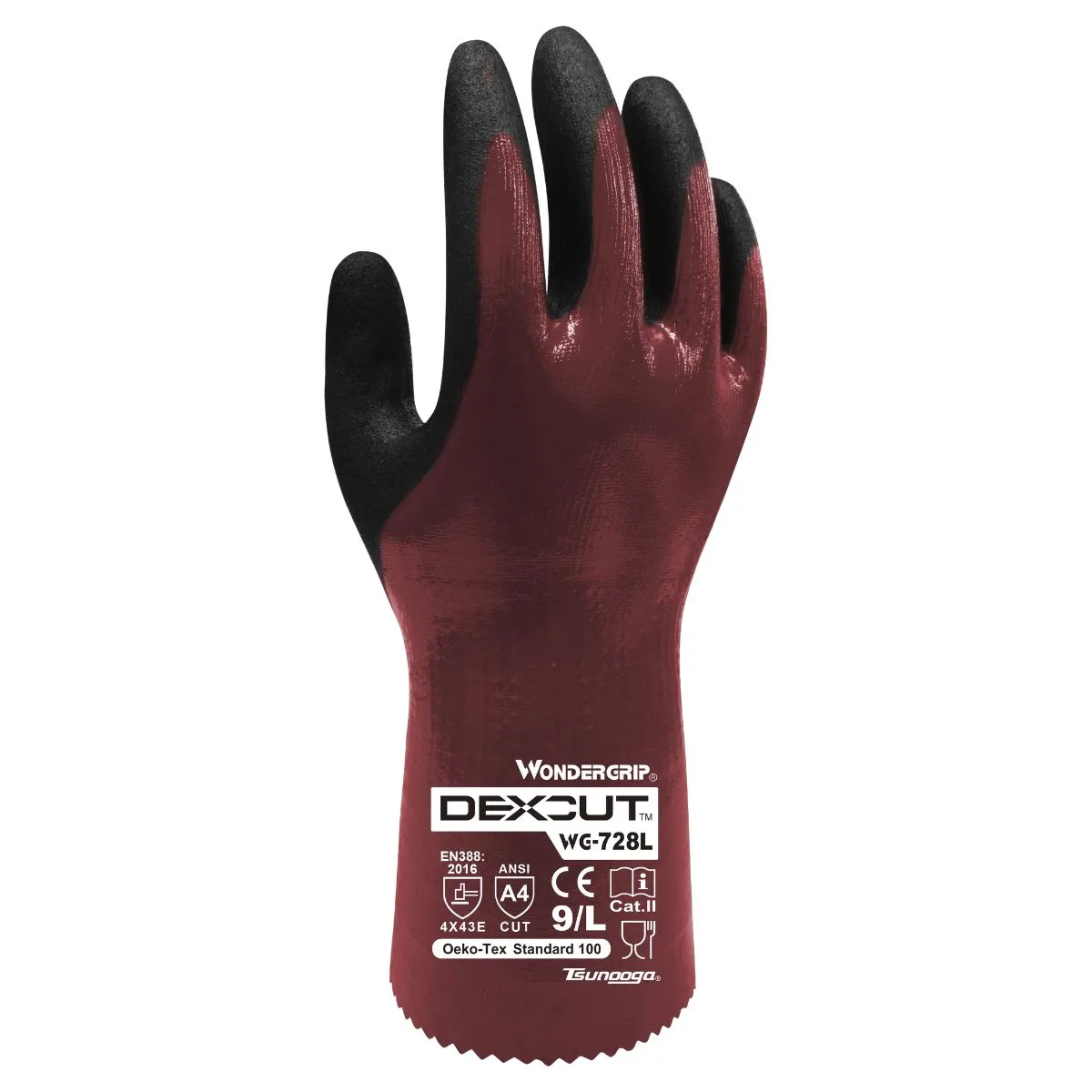
The Wonder Grip WG-728L DEXCUT®: Built for Workers Who Handle Sharp Materials
The Wonder Grip WG-728L DEXCUT® is a triple nitrile fully coated anti-cut glove designed to support workers in industries where sharp materials are common. With its high-performance polyethylene (Tsunooga™) liner, this glove provides superior cut resistance and outstanding abrasion resistance. The triple-dipped nitrile coating offers excellent grip in dry and wet conditions, making it ideal for workers who handle glass, metal, and other sharp materials.
Frequently Asked Questions
Q: What is the best material for oil resistant work gloves?
A: Nitrile is a popular material for oil resistant work gloves due to its excellent oil resistance and durability. However, other materials, such as polyurethane and latex, may also be suitable depending on the specific work environment and tasks. The Wonder Grip WG-728L DEXCUT® features a triple nitrile coating for superior oil resistance.
Q: How do I choose the right size of oil resistant work gloves?
A: Choosing the right size of oil resistant work gloves is crucial to ensure a comfortable fit and optimal protection. Workers should consider the size of their hands, as well as the type of work they will be doing, when selecting gloves. The Wonder Grip WG-728L DEXCUT® is available in a range of sizes to fit different hand sizes and preferences.
Q: Can oil resistant work gloves be washed and reused?
A: Some oil resistant work gloves can be washed and reused, while others may need to be replaced after a single use. The Wonder Grip WG-728L DEXCUT® can be washed and reused, but it is essential to follow the manufacturer's instructions for cleaning and maintenance to ensure the glove's performance and durability. Regular washing and maintenance can help extend the life of the glove and provide continued protection for workers.
By choosing the right pair of oil resistant work gloves, such as the Wonder Grip WG-728L DEXCUT®, workers can protect themselves from the risks associated with oil and other lubricants. With its superior cut resistance, excellent grip, and durable construction, this glove is built for workers who handle sharp materials and require a reliable barrier against oil and other substances. Visit takumius.com to learn more about the Wonder Grip WG-728L DEXCUT® and other high-quality work gloves designed to support workers in various industries.
Shop Work Gloves at Takumi Safety
Browse professional-grade work gloves built for real work. View the Wonder Grip WG-728L DEXCUT® and shop the full range at takumius.com.